The Pawz Blogs


Flying Squirrels vs. Sugar Gliders: Nature's Cutest Copycats
If you've ever seen a sugar glider and thought "Oh wow, a flying squirrel from Australia!" — you're not alone. These two critters look like they were separated at birth, but spoiler alert: one's a rodent, the other's a marsupial. They're basically the "same outfit, different designer" situation of the animal kingdom. Scientists call this convergent evolution — which is just a fancy way of saying nature copy-pasted the gliding idea twice, from completely different blueprints. Flying squirrels are closer to chipmunks and rats. Sugar gliders are closer to kangaroos and possums. One is a caped crusader of the temperate forest; the other is a tiny pouched party animal from the eucalyptus belt. Same vibe. Zero shared ancestry. 🌙 Nightlife of the Gliders Flying squirrels: The introverts of the treetops. They sneak out at dusk, glide silently through the dark like tiny stealth bombers, stash nuts like they're prepping for the apocalypse, and go home alone. Peak activity hits around midnight. By 4 AM they're back in their tree cavity, unbothered and unapologetic. Sugar gliders: The extroverts. They wake up, immediately start grooming each other, chirp, bark, hiss, and then glide off together for a nectar party. Think frat house meets forest canopy — with a strict 6 PM start time and cuddle piles at 2 AM. Their nights are basically one long group hangout with snacks. 🍽️ Dining Habits Flying squirrels: Nuts, seeds, fungi, insects, and the occasional bird egg — basically the forest buffet. Bonus: they spread fungal spores underground, making them the unsung gardeners of the woods. No flying squirrel, no healthy forest. Respect. Sugar gliders: Sweet tooth central. Sap, nectar, fruits, plus the occasional insect for protein. They'll gouge eucalyptus bark like tiny lumberjacks just to get to the good stuff. In captivity, they'll happily switch to fruit smoothies and nectar substitutes — the original meal-prep crowd. 🧪 Weird But True 🌈 Flying squirrels glow neon pink under UV light. Yes, really. Scientists aren't entirely sure why. We like to think they're just built for the rave. 🏷️ Sugar gliders mark their humans with scent glands on their heads and chests. If your sugar glider rubs its face on you, congratulations — you are now officially their property. ✈️ Flying squirrels can pull off sharp 90° mid-air turns using their flat tails as rudders and brakes. Sugar gliders? Smoother operators — long tails for balance, gliding up to 165 feet like tiny sky surfers. 🎙️ Sugar gliders can recognize individual human voices and respond differently to familiar vs. unfamiliar tones. They know who you are. They're judging you accordingly. 🌲 Giant flying squirrels in Asia can grow up to 3 feet long and weigh nearly 10 pounds. The North American ones are pocket-sized. The Asian ones are a whole different conversation. 💤 Sugar gliders form "glider balls" — piling 6 or 7 together in a nest hollow for warmth and bonding. ❄️ Flying squirrels share nests in winter despite being mostly solitary — a rare moment of togetherness driven purely by the need to not freeze. Relatable. 🏡 Wild vs. Captive Life Flying squirrels in captivity: Still shy, still nocturnal, still plotting nut heists. They'll tolerate you, recognize your face, and occasionally not bite you. Don't expect cuddles — expect respectful coexistence. Lifespan: up to 10 years with good care. Sugar gliders in captivity: Social butterflies. They bond deeply with humans, ride around in shirt pockets, demand group hugs, and will literally sleep on you if given the chance. Keep one alone and it gets depressed — like a teenager without Wi-Fi. Lifespan: up to 14 years in captivity, making them a long-term commitment and a long-term best friend. 🎭 The Big Picture Flying Squirrel 🐿️ Sugar Glider 🪶 Family Rodent (Sciuridae) Marsupial (Petauridae) Home turf North America, Europe, Asia Australia, Indonesia, New Guinea Social vibe Lone wolf Pack animal Superpower Neon UV glow Voice recognition + scent marking Ecosystem role Fungal spore engineer Pollinator & insect controller Captivity style Tolerates you Obsessed with you Lifespan (captive) Up to 10 years Up to 14 years Flying squirrels are the forest engineers, spreading fungi and keeping ecosystems quietly healthy. Sugar gliders are the pollinators and party animals, keeping eucalyptus forests buzzing with life. Both evolved gliding membranes completely independently — proving that nature sometimes says: "Copy the homework, but change a few answers." Two animals. One incredible trick. Zero family resemblance. All the charm. 🐾
Learn more
The Red Robe vs. The Masked Bandit
One's a flame-robed hermit in the Himalayan mist. The other's a masked bandit raiding your bin at midnight. Red panda vs. raccoon — same fake thumb, completely different energy.
Learn more
The Koala: Australia's Sleepiest Superstar
Looks like a stuffed toy. Lives like a philosopher. Secretly a chaos gremlin. Wait — It's Not a Bear? Meet the koala (Phascolarctos cinereus) — Australia's most huggable export and the world's most successful napper. Despite the name and the undeniable teddy-bear energy, koalas are not bears. They're marsupials, making them far more closely related to wombats and kangaroos than to anything you'd find at a picnic. They measure 60–85 cm, sport thick grey-brown fur, gloriously fluffy ears, and a big shiny nose that looks permanently surprised. No tail — but their rump is so densely padded with fur that they've essentially evolved a built-in cushion for sitting in trees all day. Honestly, goals. Surprise! There's More to This Fluffball Two thumbs — because one wasn't enough Koalas evolved two opposable "thumbs" on each front paw for maximum tree-gripping power. Their hind feet have a special double-clawed toe used exclusively for grooming. They are, in short, better equipped for climbing than most of us are for anything. Teeth with an expiry date Eucalyptus leaves are basically sandpaper with nutrients. A koala's teeth grind down continuously throughout its life, and many older wild koalas eventually lose their molars entirely. It's one of the most common causes of death in the wild — a sobering reminder that even the cutest animals have their struggles. Their fingerprints could fool a detective Koalas are the only non-primate known to have fingerprints nearly identical to human ones — same loops, same whorls, same everything. They evolved this independently, purely for grip. Forensic investigators have reportedly been confused by koala prints at crime scenes. The koala: accidental criminal mastermind. Smallest brain, biggest vibes Koalas have one of the smallest brain-to-body ratios of any mammal. An adult brain weighs about 19.2 grams, and 40% of the skull is just… fluid. Scientists think this is an energy-saving adaptation to their low-calorie diet. Fewer thoughts, more naps. A lifestyle philosophy we can all consider. Bad eyes, incredible nose Koalas have poor colour vision, but their sense of smell is extraordinary. They can sniff out which leaves are toxic, which are delicious, and which trees have already been claimed by other koalas. Essentially, their nose does all the heavy lifting their eyes refuse to do. Daily Life: A Masterclass in Doing Less Pickiest eater at the table Out of 600+ eucalyptus species, koalas will deign to eat about 30. And not just any leaves — only the freshest, most tender ones at the very top of the tree. They are, essentially, the food critics of the animal kingdom. Never drinks water (and proud of it) The word "koala" is thought to come from an Aboriginal word meaning "no water." Koalas get almost all their hydration from eucalyptus leaves. As a bonus, this gives their fur a natural eucalyptus scent — nature's own bug repellent. They smell like a spa. Respect. Professional sleeper, 18–22 hours a day Eucalyptus leaves are toxic, low in calories, and hard to digest. The koala's solution? Evolve a 2-metre-long caecum to detoxify everything, slow the metabolism way down, and sleep for the better part of every day. When awake, they mostly just… sit there. Living the dream, honestly. Tree-hugging is actually air conditioning Koalas hug trees not just because they love them (though surely they do), but because tree trunks are significantly cooler than the surrounding air on hot days. It's a full-body cooling system. They figured out passive climate control millions of years before humans did. Going to the ground is basically a horror movie Koalas spend 98% of their lives in trees — and for good reason. On the ground, they shuffle along at a pace that can only be described as "determined but optimistic." Dogs, foxes, and cars are all genuine threats. They only come down when absolutely necessary, and even then, you can tell they're not happy about it. Fun Facts That Will Break Your Brain Joeys eat mum's special "pap" — yes, really When a koala joey is ready to transition from milk to eucalyptus leaves, there's a problem: the leaves are toxic and the joey has no gut bacteria to handle them. Mum's solution is to produce a special semi-digested substance called "pap" for the joey to eat, packed with the microbiome it needs. It's gross, it's brilliant, and it works. Nature is wild. The T-Rex in Jurassic Park was a koala Male koalas have an extra set of vocal cords outside their larynx, letting them produce deep, bellowing roars audible for kilometres — about 20 times deeper than their body size should allow. The sound designers for Jurassic Park recorded male koalas and processed the audio for the T-Rex. The most terrifying dinosaur in cinema history sounded like a very grumpy eucalyptus enthusiast. How Long Do Koalas Live? Wild koalas typically live 10–15 years. In captivity — with no predators, reliable food, and actual veterinary care — they can reach 15–20 years, with some overachievers hitting 21. The record holder at Lone Pine Koala Sanctuary in Australia was a female named Gidji, who made it to 21 and presumably spent most of it asleep. Wild males: ~10–12 years. They're territorial, fight over mates, roam further, and take more risks. Classic. Wild females: ~12–15 years, occasionally up to 17. Statistically wiser. Captive koalas: Living their best, longest lives. Bonus fact: a female koala's actual breeding window is surprisingly short. Despite living over a decade, fertility drops sharply after age 10 — meaning most successful reproduction happens between ages 3–8. Quality over quantity, apparently. Obsessed with koalas now? Same. Wear the love with the Heart in Pawz: Koala Graphic T-Shirt.
Learn more
10 Things You May Not Know About Poodles
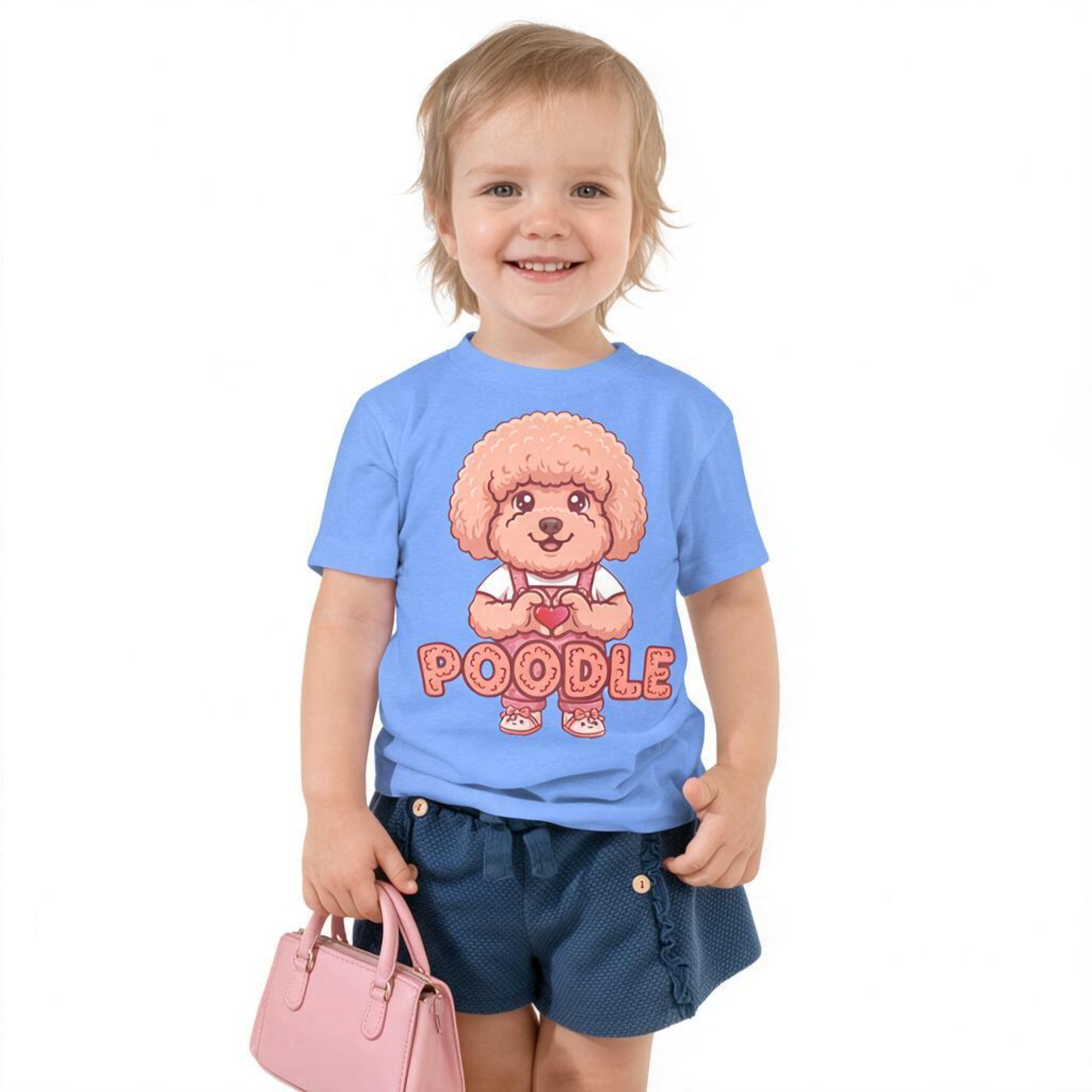
Smart, stylish, and secretly hilarious — the Poodle is not what you think. Let's be honest. When most people picture a Poodle, they imagine a fluffy show dog with an elaborate haircut, prancing around a ring. And while that's not entirely wrong — it's barely scratching the surface. The Poodle is one of the most misunderstood, underestimated, and frankly fascinating breeds on the planet. Here's everything you need to know. 1. They're Not French. Despite being France's national dog, the Poodle actually originated in Germany, where they were bred as water retrievers. Their name comes from the German pudel or pudelin — meaning to splash in water. In France, they became Caniche, meaning "duck dog." 2. That Haircut Has a Purpose The iconic Poodle clip wasn't invented by a bored groomer with too much time. It was functional. Hunters trimmed their Poodles' coats to protect joints and vital organs from cold water while allowing efficient movement during retrieval. Style born from survival. The Poodle was fashionable before it even knew what fashion was. 3. They're Basically Einsteins in Fur Coats Poodles rank #2 on the canine intelligence list, just behind Border Collies. They can learn a new command in fewer than five repetitions and obey on the first try about 95% of the time. For context, the average dog needs 25–40 repetitions. Your Poodle is not showing off. They just can't help it. 4. They Come in Four Sizes (Pick Your Adventure) Standard Poodle — the original, shoulder height above 38 cm, built like an athlete Medium Poodle — the middle child, 35–45 cm, perfectly balanced Miniature Poodle — compact and clever, 28–35 cm Toy Poodle — pocket-sized genius, under 28 cm, maximum personality per kilogram Fun fact: All four sizes share the same intelligence, temperament, and dramatic flair. Size is the only variable. 5. They Have Hair, Not Fur Most dogs shed. Poodles don't — because they have hair that grows continuously, much like humans. This makes them one of the most hypoallergenic breeds around, which is great news for allergy sufferers and anyone who prefers their sofa fur-free. The trade-off? Regular grooming. A Poodle's coat tangles fast and needs professional attention every 4–6 weeks. "Owning a Poodle is like having a roommate who always looks better than you but never cleans up after themselves." 6. Rembrandt Painted One Dutch master Rembrandt van Rijn included a Poodle in one of his self-portraits. If that's not a flex, we don't know what is. Poodles have been rubbing shoulders with greatness for centuries. 7. John Steinbeck Took One Across America Nobel Prize-winning author John Steinbeck travelled across the United States with his Standard Poodle, Charley. The journey inspired his book Travels with Charley: In Search of America. Charley reportedly kept Steinbeck sane, grounded, and well-accompanied. Good dog, Charley. 8. Elvis Gave Them as Gifts Elvis Presley was known for gifting Poodles to the people he loved. If the King of Rock and Roll thought Poodles were the ultimate gift, who are we to argue? 9. They Once Ran the Iditarod Yes, really. A team of Standard Poodles once competed in the Iditarod Trail Sled Dog Race in Alaska — one of the most gruelling endurance races on earth. They didn't win, but they absolutely showed up, which is very on-brand for a Poodle. "A Poodle entering a sled dog race is the canine equivalent of showing up to a marathon in a tuxedo. Committed. Elegant. Slightly overdressed." 10. They Started the Designer Dog Revolution The very first designer dog hybrid was a Poodle crossbreed — paving the way for Labradoodles, Goldendoodles, Cockapoos, and every other -oodle and -poo you've ever met. The Poodle didn't just adapt to the modern world. It shaped it. Bonus: A Few Poodle Truths They are deeply affectionate and prone to separation anxiety — because once a Poodle loves you, they really commit They are athletic, energetic, and need daily mental stimulation — a bored Poodle is a creative Poodle, and not always in a good way They have been guide dogs, therapy dogs, and circus performers — versatile doesn't begin to cover it Rescue Poodles have broken multiple Guinness World Records for agility and intelligence At Pawzallianz, we believe animals are mirrors of the best parts of us — our wit, our warmth, our wild side. The Poodle embodies all of that. And then some. 🐾
Learn more